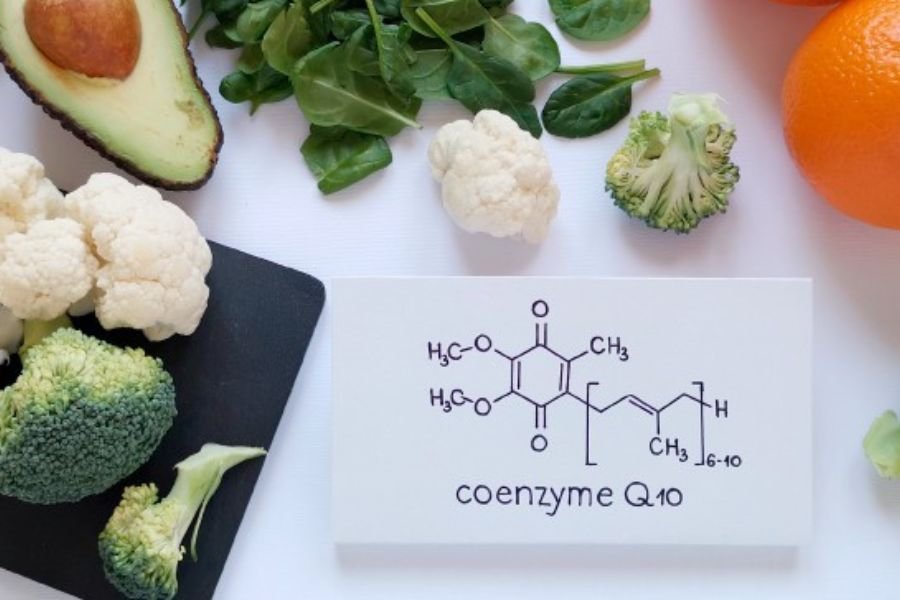
How CoQ10 Supports Your Heart by Managing Cholesterol
A healthy cholesterol level plays a major role in protecting your heart. If you have been reading about supplements, you may have seen CoQ10 linked with cholesterol more than once. Understanding how CoQ10 and cholesterol interact can help you have a more informed conversation with your healthcare provider and decide whether this supplement fits into your routine.
CoQ10, short for coenzyme Q10, is a vitamin-like substance that your body naturally produces. It is involved in energy production in your cells and it acts as an antioxidant. Both of these roles are closely connected to heart health and cholesterol balance.
What CoQ10 is and why your heart uses so much of it
CoQ10 lives in the mitochondria of your cells, where it helps turn food into usable energy. Your heart is one of the hardest working muscles in your body, so it has a particularly high demand for CoQ10.
CoQ10 also acts as a fat-soluble antioxidant. It helps protect cell membranes and LDL cholesterol particles from oxidative damage. Oxidative stress is one of the processes that can turn ordinary cholesterol into a bigger problem for your arteries, so this antioxidant role matters for your cardiovascular system too (Vinmec).
You do get some CoQ10 from food, mostly from meat, fish, and nuts. However, the amounts in food are relatively small and usually are not enough to correct a low CoQ10 level on their own, especially if your levels are reduced by medication such as statins (Mayo Clinic).
How CoQ10 and cholesterol are connected
When you look at CoQ10 and cholesterol together, there are two main storylines. One is how CoQ10 may influence your cholesterol numbers and lipid profile. The other is how cholesterol-lowering medications can lower your CoQ10 levels.
On the cholesterol side, a large meta-analysis of 50 randomized controlled trials involving 2794 adults found that CoQ10 supplementation was linked with improvements in several blood lipids. On average, people taking CoQ10 experienced reductions in:
- Total cholesterol by about 5.53 mg/dL
- LDL cholesterol by about 3.03 mg/dL
- Triglycerides by about 9.06 mg/dL
They also had a small increase in HDL, the “good” cholesterol, by about 0.83 mg/dL (PubMed).
From a big-picture view, that means CoQ10 appeared to support a more favorable cholesterol pattern, especially in people with dyslipidemia, which is the medical term for abnormal blood lipids. The same analysis suggested an inverse J-shaped dose response. The greatest total cholesterol reduction showed up at daily doses in the range of about 400 to 500 mg, although many individual studies used lower doses (PubMed).
Researchers have also explored how CoQ10 might influence other cardiovascular risks that travel alongside cholesterol, such as blood pressure and blood sugar. For example, CoQ10 has been studied for its potential to improve blood pressure and glycemic control in people with type 2 diabetes, which ties into overall cardiovascular risk as well (WebMD).
The role of oxidative stress and “oxidized” cholesterol
You will often see oxidative stress mentioned in discussions of CoQ10 and cholesterol. Oxidative stress occurs when there are more free radicals in your body than your antioxidants can comfortably handle. Over time, this imbalance can damage cells and lipids, including LDL cholesterol.
Researchers have found that CoQ10 levels and distribution in the blood can change in people who have inherited cholesterol disorders. The redox, or oxidation, status of CoQ10 within LDL particles may serve as an indicator of oxidative changes happening in those lipoproteins (WebMD). This matters because oxidized LDL is considered more harmful to artery walls than ordinary LDL.
By acting as an antioxidant in lipoproteins and cell membranes, CoQ10 may help limit this oxidative modification. In practical terms, that could translate into less oxidative damage in your arteries and a lower risk of cholesterol-related complications, although the exact impact for you as an individual will depend on many factors, including diet, lifestyle, and genetics.
How statin medications affect your CoQ10 levels
If you take a statin to manage high cholesterol, CoQ10 becomes even more relevant. Statins work by blocking an enzyme involved in cholesterol production. This same enzyme pathway is also used for CoQ10 production.
Multiple studies have documented that statins, such as simvastatin and atorvastatin, can significantly reduce serum CoQ10 levels in your blood and muscle tissues (WebMD). Some of the research suggests that this drop in CoQ10 may be one factor behind certain statin side effects, particularly muscle pain or weakness in some individuals.
The Mayo Clinic notes that people who take cholesterol-lowering statins may have lower CoQ10 levels than those who do not. CoQ10 is something your body normally produces, so that drop could be meaningful for your muscles and your overall energy (Mayo Clinic).
There is also evidence that taking CoQ10 supplements can help prevent or reverse the reduction in plasma CoQ10 that statins cause. In one line of research, supplementation with CoQ10 helped maintain or restore normal levels of ubiquinone, the oxidized form of CoQ10, in people treated with HMG-CoA reductase inhibitors, which are the statin class of medications (WebMD).
This does not mean you should take CoQ10 automatically if you are on a statin, but it is a topic worth raising with your healthcare provider, especially if you experience unexplained muscle symptoms.
What the research suggests about heart outcomes
Beyond lab numbers, you are probably wondering whether CoQ10 translates into meaningful heart outcomes. Research is still evolving, and scientists continue to study this question, but there are some encouraging hints.
A review of 13 studies looked at people with existing heart conditions, such as heart failure and angina, who took CoQ10 in doses from 60 to 300 mg per day. The authors reported that CoQ10 supplementation might reduce certain risk factors for heart disease, including lowering levels of LDL cholesterol in these groups (Vinmec).
Other studies have examined CoQ10 after a heart attack, where it has been investigated for its potential role in reducing the risk of atherosclerosis and improving some cardiovascular outcomes (WebMD). There are also reports that CoQ10 supplementation may improve blood flow and reduce hospitalizations in some heart failure patients, although dosage and timing varied across trials (Vinmec).
It is important to keep in mind that CoQ10 is not a replacement for prescribed heart or cholesterol medications. Instead, it is being studied as a supportive therapy that might help improve energy production in heart cells, protect lipids from oxidative damage, and slightly improve lipid profiles alongside standard care.
Current evidence suggests CoQ10 can support a healthier cholesterol pattern and overall heart function, especially in people with existing cardiovascular concerns, but it should be viewed as a complement to, not a substitute for, your main treatment plan.
Typical CoQ10 doses for cholesterol and heart support
CoQ10 supplements come in a wide range of doses. The right amount for you depends on your health status, medications, and your healthcare provider’s guidance.
In studies of people with heart conditions and high cholesterol, daily doses often fall between 60 mg and 300 mg. Within that range, researchers have seen improvements in blood flow, reductions in certain hospitalizations, and modest drops in LDL cholesterol (Vinmec).
The large meta-analysis on lipids that found the greatest total cholesterol reduction around 400 to 500 mg per day suggests that higher doses may sometimes have a stronger effect on cholesterol. However, those higher doses are not necessary or appropriate for everyone (PubMed).
A simple way to think about dosing is that most common supplement regimens for cholesterol and heart support are in the low to mid hundreds of milligrams per day, often split into one or two doses with food, because CoQ10 is fat soluble and absorbs better when taken with a meal that contains some fat.
Always talk with your doctor or pharmacist before choosing a dose, especially if you have heart disease, diabetes, or take multiple medications.
Safety, side effects, and when to talk with your doctor
For most people, CoQ10 appears to be well tolerated. Healthcare professionals generally consider it safe, with relatively few side effects reported in studies and clinical use (Mayo Clinic). When side effects do occur, they are usually mild and might include digestive discomfort, nausea, or insomnia in some individuals.
If you are taking a statin or another cholesterol-lowering medication, it is especially important to bring your healthcare provider into the conversation before you start CoQ10. Your provider can help you look at potential interactions with other drugs, coordinate dosing, and monitor whether you notice changes in muscle symptoms, energy, or lab values.
You should also reach out to a clinician if you:
- Have heart failure, a recent heart attack, or serious arrhythmias
- Live with conditions like diabetes, where CoQ10 has been studied for metabolic effects
- Are pregnant, breastfeeding, or planning a pregnancy
CoQ10 is available without a prescription, but it still acts on important pathways in your body. Treating it with the same respect that you give to prescribed medications is the safest approach.
How to decide if CoQ10 belongs in your plan
Deciding whether to add CoQ10 to your routine starts with your goals. If you are mainly focused on improving your cholesterol numbers, CoQ10 can be one small piece of a bigger strategy that also includes diet, movement, sleep, and medications when indicated.
If you already take a statin or have a heart condition, you might be particularly interested in CoQ10 for one of two reasons. First, you may want to support mitochondrial energy production in your heart muscle. Second, you may want to replace some of the CoQ10 that statins can deplete and possibly reduce muscle-related side effects.
A brief summary of how CoQ10 fits into cholesterol and heart health looks like this:
| Aspect | What CoQ10 may do | Evidence source |
|---|---|---|
| LDL and total cholesterol | Modestly reduce LDL and total cholesterol and lower triglycerides while slightly raising HDL | Meta-analysis of 50 RCTs (PubMed) |
| Oxidative stress | Act as an antioxidant in LDL and cell membranes, potentially reducing harmful oxidation | Oxidation studies and hyperlipidemia research (WebMD) |
| Statin use | Counteract statin-related drops in CoQ10 and may ease muscle symptoms in some people | Statin and CoQ10 level studies (Mayo Clinic, WebMD) |
| Heart conditions | Support heart function and improve certain cardiovascular risk markers alongside standard therapy | Heart failure, angina, and post MI studies (Vinmec, WebMD) |
If you decide to bring this up with your doctor, you might share what you have learned about CoQ10 and cholesterol and ask whether a trial of supplementation is reasonable for your situation. Together, you can choose a dose, a timing strategy, and a way to track how you feel and how your numbers respond over time.
By understanding how CoQ10 and cholesterol intersect, you put yourself in a stronger position to protect your heart and tailor your supplement choices to what your body truly needs.
About The Author