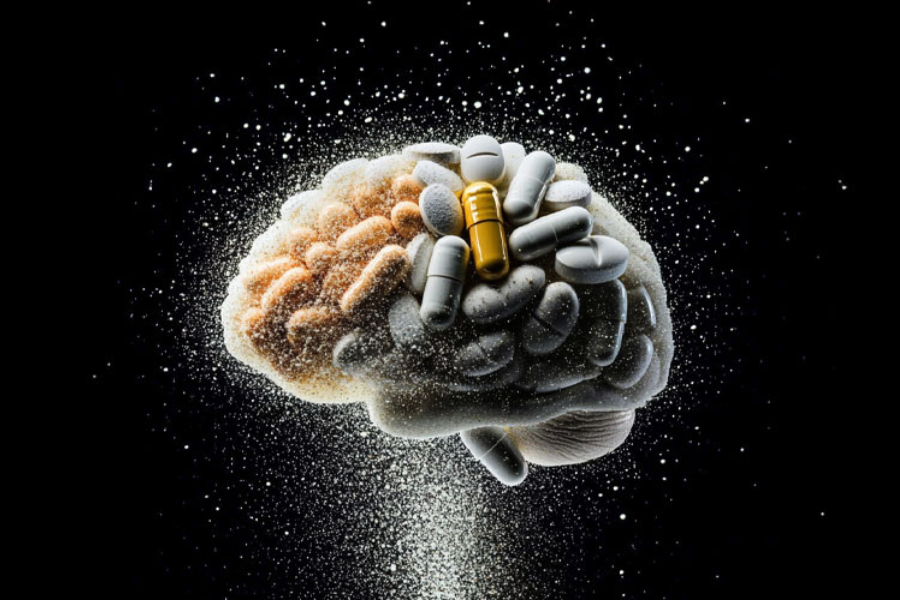
Discover the Top Nootropics for ADHD That Boost Focus
Nootropics for ADHD get a lot of attention for one reason: you want better focus, memory, and follow-through without feeling wired or wiped out. While some nootropics are prescription ADHD medications and others are over-the-counter supplements, they are not magic fixes and they are not a replacement for a solid treatment plan. They can, however, be one piece of a broader strategy to manage symptoms when you use them thoughtfully and with medical guidance.
Below, you will learn what nootropics are, which options have the strongest evidence for ADHD, which are more experimental, and how to approach them safely.
Understand what nootropics are
Nootropics, also called smart drugs or cognitive enhancers, are substances that may improve thinking, learning, memory, motivation, or focus. They range from everyday stimulants like caffeine to prescription medications for ADHD, and from herbal extracts to synthetic research compounds.
Research suggests that nootropics can be especially useful when brain function is impaired, including in conditions like hyperkinetic disorder, ADHD, Alzheimer’s disease, and mild cognitive disorders (NCBI). For ADHD in particular, people are often looking to:
- Stay focused on tasks that feel boring but important
- Reduce impulsive decisions
- Remember details like instructions, appointments, and deadlines
- Feel mentally clear instead of foggy or overwhelmed
You will see two broad categories as you explore nootropics for ADHD: prescription medications with strong evidence, and nonprescription or “natural” options where the science is more limited or mixed.
Start with evidence based ADHD medications
Some of the most effective and well studied nootropics for ADHD are actually the standard prescription medications you may already know. They have been tested in large clinical trials and are approved by regulators for ADHD treatment when prescribed by a doctor.
Methylphenidate (Ritalin and similar)
Methylphenidate is a synthetic nootropic and one of the most widely prescribed ADHD medications. A 2020 review found that it significantly improved attention and executive function in children with ADHD (Healthline). You may notice benefits like:
- Longer attention span on tasks
- Better ability to plan, organize, and complete projects
- Less restlessness or “mental bouncing” between ideas
Methylphenidate is a controlled substance, so you can only use it under medical supervision. If you are considering nootropics and have not yet explored standard ADHD medications with your provider, this is often the most evidence based place to start.
Prescription stimulants like Adderall
Other prescription stimulants such as Adderall are also considered nootropics because they improve attention and focus. They are controlled substances in the United States and require a prescription (BrainFacts).
These medications can be highly effective, but they carry risks such as potential dependence and side effects like appetite changes or sleep disturbance. This is why close coordination with a healthcare professional is essential if you decide to use them.
Modafinil (Provigil)
Modafinil is another synthetic nootropic and wakefulness promoting agent originally used for narcolepsy and sometimes for attention difficulties. A 2022 study found it improved cognitive performance and reduced impulsivity in children aged 6 to 12 with ADHD (Healthline). Other sources describe it as a strong nootropic that boosts cognition and motivation and helps maintain focus for extended periods of time without a crash, which has made it a popular alternative to Adderall (Mental Health Center).
Modafinil is also a prescription drug, not an over the counter supplement. If you are curious about it as an option, you will need to discuss potential benefits and risks with your clinician.
Key point: Prescription ADHD medications like methylphenidate and modafinil are some of the best studied nootropics for ADHD, but they require a doctor’s supervision and are not suitable for everyone.
Explore popular nonprescription nootropics
If you are already on medication or not a candidate for prescription stimulants, you might look at nonprescription nootropics for ADHD as a complementary approach. The science here is less clear. Some people report benefits, while research findings can be limited or mixed (BrainFacts).
Caffeine and L theanine
Caffeine is probably the most widely used nootropic in the world. It promotes alertness and can temporarily sharpen attention, which is why many people with ADHD feel more functional after coffee. However, it is not specifically prescribed for ADHD (BrainFacts).
L theanine, an amino acid found in green tea, is often combined with caffeine to smooth out jitteriness and may improve attention in some people. These are commonly discussed nootropics for ADHD related focus, but scientific evidence that they reliably reduce ADHD symptoms is still limited and mixed (Polished Mind Psychiatry).
Omega 3 fatty acids and Ginkgo biloba
Natural nootropics such as Ginkgo biloba and omega 3 fatty acids may offer cognitive benefits as complementary treatments. They may help with brain health, blood flow, and memory, and some people use them to support ADHD symptoms. However, research is limited, especially in children, and their effectiveness and safety are not yet well established (Healthline).
Panax ginseng
Panax ginseng is another plant based nootropic that has shown antioxidant and memory enhancing effects in animal studies. It can influence synaptic plasticity and neurotransmitter systems, which has potential implications for cognitive improvement in conditions like ADHD (NCBI). Evidence in humans is still emerging, so you should treat it as experimental support rather than a proven treatment.
L tyrosine
L tyrosine is an amino acid involved in producing dopamine, norepinephrine, and epinephrine. Because these neurotransmitters play a key role in attention and focus, L tyrosine is sometimes used to boost energy and concentration. Research from the 1980s suggested a possible link between L tyrosine deficiency and attention difficulties (Mental Health Center).
In practice, some people take L tyrosine on its own or as part of a nootropic stack. You will want to talk with a professional before combining it with prescription ADHD medications, since both can affect the same brain chemicals.
Consider racetams and other synthetic nootropics carefully
Beyond herbs and vitamins, you will find a class of synthetic nootropics that attract a lot of interest in online ADHD communities. These are often easier to buy than prescription medications, but that does not mean they are automatically safe or well studied.
Piracetam and its analogues
Piracetam, a derivative of the neurotransmitter GABA, is one of the original racetams. It appears to enhance cognitive function by boosting blood flow to the brain and supporting neurotransmission and brain metabolism. It has been explored for learning and memory improvements and conditions like developmental dyslexia in children (NCBI).
Some sources suggest doses between 3,200 and 6,400 mg for people with ADHD to see effects, but this use is not officially approved and research in ADHD is not as extensive as for standard medications (Mental Health Center). Clinical trials in Alzheimer’s disease, for example, did not show significant benefits, which is a reminder that effects can vary by condition.
Noopept and related compounds
Noopept is another synthetic nootropic that is more potent than piracetam at lower doses, often in the 10 to 40 mg range. It appears to improve memory retention and recall, enhance focus for longer periods, and promote the formation of new synapses and neurons, with relatively few reported side effects in available data (Mental Health Center).
Despite its popularity, large, long term studies in ADHD are limited. As with other racetams, much of what you hear comes from individual experiences rather than robust clinical trials.
DMAE and meclofenoxate
DMAE (deanol) has been tested in children with hyperkinetic syndrome and minimal brain dysfunction, two conditions related to attention and hyperactivity. Animal studies show improved alertness and spatial memory, with typical daily doses in research settings between 500 and 2,000 mg (NCBI).
Meclofenoxate is closely related and is about twice as effective as DMAE in increasing brain acetylcholine levels. It has demonstrated benefits for improving memory impairment and reducing neuronal damage, which suggests potential as a therapeutic tool for cognitive disorders including hyperkinetic disorder and possibly ADHD (NCBI).
What the science says so far
Many users believe that racetams and other synthetic nootropics can enhance cognition. However, research is still limited, especially in healthy adults, and there is no clear endorsement of these compounds as standard ADHD treatments (BrainFacts).
If you consider them, it is especially important to involve a knowledgeable clinician, since quality control, dosing, and interactions with other medications can be uncertain.
Combine nootropics and ADHD meds cautiously
You might be tempted to stack different nootropics together or add them on top of your current prescription. This is an area where you want to slow down and be very deliberate.
Some research suggests that combining nootropics with standard ADHD medications might help in specific situations. For example, pairing atomoxetine with methylphenidate has sometimes improved treatment adherence and reduced side effects under careful professional supervision (Healthline). However, more research is needed to confirm safety and effectiveness, and this is not something to try on your own.
Risks of combining multiple nootropics or adding them to medication can include:
- Increased side effects, such as headaches, digestive upset, or elevated heart rate
- Unpredictable interactions with prescribed ADHD medications
- Potential problems for pregnant or breastfeeding individuals (Polished Mind Psychiatry)
Because your brain chemistry and health history are unique, what is safe for someone else may not be safe for you.
Use nootropics for ADHD safely and intentionally
The biggest mistake people make with nootropics for ADHD is treating them as quick fixes instead of tools in a larger treatment plan. To use them responsibly, you can take a structured approach.
-
Talk with a healthcare professional first
Before starting any nootropic, especially if you already take ADHD medication, consult a clinician who understands both ADHD and supplements. Expert guidance can help you avoid harmful combinations and choose options that fit your situation (Polished Mind Psychiatry). -
Clarify what you want to improve
Be specific. Are you trying to sit through long meetings, finish tasks on time, or remember complex instructions? Clear goals will make it easier to tell whether a nootropic is actually helping. -
Change one variable at a time
If you add or adjust something, do not introduce three new supplements at once. Try one change, track your experience for several weeks, and then decide whether to keep it. This way, you can see what is working and what is not. -
Watch for side effects and interactions
Even “natural” options can cause headaches, digestive issues, sleep problems, or mood changes. If you notice anything concerning, stop and contact your provider. -
Remember the bigger picture
Nootropics are not a substitute for therapies, lifestyle changes, or prescribed medications. As Polished Mind Psychiatry emphasizes, they should fit into a broader ADHD treatment plan rather than replace evidence based care (Polished Mind Psychiatry).
Takeaway: Build a smart strategy, not a quick fix
Nootropics for ADHD range from well studied prescriptions like methylphenidate and modafinil to supplements such as omega 3s, Ginkgo biloba, Panax ginseng, L tyrosine, and synthetic compounds like piracetam, Noopept, DMAE, and meclofenoxate. Some have solid evidence, others are promising but under researched, and a few are mostly supported by personal reports rather than rigorous trials (Healthline, NCBI).
If you decide to explore nootropics, frame them as part of a thoughtful experiment, not a cure. Work with a professional, start low and slow, track how you feel, and keep what clearly helps your focus, mood, and daily life while setting aside what does not. This careful, curious approach gives you the best chance of finding tools that genuinely support the way your ADHD brain works.
About The Author


