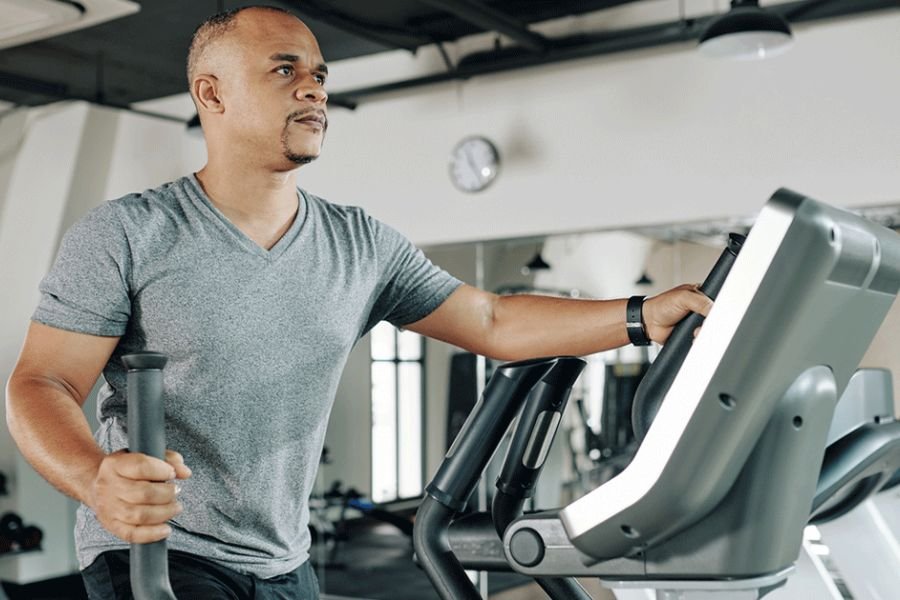
Unlock Amazing Muscle Toning with This Elliptical Workout
Why an elliptical workout for muscle toning works
If you want to tone up without punishing your joints, an elliptical workout for muscle toning is one of the most efficient options you can choose. With the right resistance, incline, and form, you work your legs, glutes, core, and even your upper body in a single low impact session.
Elliptical machines with moving handles can engage your glutes, hamstrings, quadriceps, chest, back, biceps, triceps, and core at the same time, which is why they are often described as full body muscle toning tools (Healthline). You are not just burning calories, you are actively strengthening and shaping key muscle groups with every stride.
The best part is that you can adjust intensity to match your current fitness level. By changing resistance and incline, you target different parts of your legs and glutes so you tone more precisely instead of doing the exact same motion every workout (Healthline).
Muscles you tone on the elliptical
An effective elliptical workout for muscle toning reaches most of your body, especially when you use the handles with intention instead of just letting them move.
Lower body focus
Most of the work happens from the waist down. During a typical stride you are training:
- Glutes, especially the gluteus maximus, medius, and minimus
- Hamstrings along the back of your thighs
- Quadriceps on the front of your thighs
- Calves, including the gastrocnemius and soleus
These muscles contract in a smooth cycle as you push down and back on the pedals, then pull up and forward, which builds endurance and definition over time (Garage Gym Reviews).
Increasing incline and resistance increases how hard your glutes and hamstrings work. A small change in incline can make a big difference, and one study found that a nine degree incline can boost hamstring activation by over six times and glute activation by more than three times (Hone Health).
Upper body and core
If your elliptical has moving arms, you can turn each stride into an upper body session as well. When you push and pull the handles with control you train:
- Chest and front shoulders when you push forward
- Back, lats, and rear shoulders when you pull back
- Biceps and triceps with every arm movement
These muscles work together with your legs to create a coordinated, full body motion (Hone Health).
Your core is also busy even if you do not feel it burning right away. The rectus abdominis, obliques, transverse abdominals, and the muscles along your lower back contract isometrically to keep you upright and stable, which contributes to better posture and a tighter midsection over time (Garage Gym Reviews).
Form tips that boost muscle toning
Good technique turns a basic cardio session into a highly effective elliptical workout for muscle toning. A few form tweaks help you get more results from the same time and effort.
Stand tall instead of leaning heavily on the handles. Keep your shoulders back, chest lifted, and eyes straight ahead. This upright posture helps your core engage and prevents your lower back from taking unnecessary strain (ACE Fitness Equipment Blog).
Place your feet flat on the pedals and avoid bouncing. Think of pressing your whole foot down and back, then pulling it up and forward in a smooth circular motion. This keeps your quadriceps and glutes active instead of letting momentum carry your legs along (Hospital for Special Surgery).
Use your arms with purpose. Bend your elbows at roughly 90 degrees, then push and pull the handles in sync with your legs. When you simply rest your hands on the bars, you lose a big chance to tone your upper body (ACE Fitness Equipment Blog).
For an extra core challenge, try brief intervals without holding the handles at all. Keep your speed moderate, engage your abs, and focus on balance. This simple change forces your stabilizing muscles to work harder (Healthline).
How resistance and incline shape your muscles
The settings you choose matter just as much as how long you stay on the machine. To turn a regular elliptical workout into a muscle toning routine, you need enough challenge to fatigue your muscles while still keeping good form.
Start with a moderate resistance level that makes your legs and glutes work without forcing you to lean on the handles or stomp the pedals. Exercise physiologists recommend building from this level gradually instead of jumping straight to the highest resistance, which can compromise technique and raise your injury risk (Hospital for Special Surgery).
As you get stronger, increasing resistance forces your quads, hamstrings, calves, and glutes to push harder each stride, which supports both strength and definition (Tousains). You will notice more of a muscle burn rather than just feeling winded.
Incline settings let you target specific areas. A higher incline shifts more work to your glutes and hamstrings, similar to walking uphill, and is excellent for shaping the back of your legs. A lower incline with steady resistance emphasizes your quads and calves. Gradually cycling through different incline levels during a workout gives your lower body a more complete toning effect (Planet Fitness).
If your elliptical offers adjustable stride length, you can fine tune even more. Shorter strides tend to load the quads and calves, while longer strides engage hamstrings and glutes more strongly, which gives you another way to tailor your workout to your goals (ACE Fitness Equipment Blog).
A 30 minute elliptical workout for muscle toning
You can get a lot done in half an hour if you structure your session around intervals. Intervals help you build both cardio fitness and muscle definition by alternating harder work with easier recovery.
Warm up, 5 minutes
Set incline to low and resistance to light. Move at a comfortable pace that gently raises your heart rate. Focus on posture, even strides, and full, smooth pedal rotations.
Strength interval block, 15 minutes
- 3 minutes, moderate effort
- Moderate resistance, low to medium incline
- Push and pull the handles, steady breathing
- Aim for a pace where you can still talk in short sentences
- 2 minutes, hill focus
- Increase incline and keep resistance moderate
- Shorten your stride slightly and drive through your heels
- You should feel glutes and hamstrings working harder
- 2 minutes, flat power
- Lower incline, raise resistance one to two levels
- Maintain good form, avoid leaning on the handles
- Legs and quads should feel a strong, controlled burn
Repeat this 7 minute pattern twice. Adjust resistance so that the last minute of each block feels challenging but manageable without losing posture.
HIIT finish, 7 minutes
Alternate 30 seconds of higher intensity with 60 seconds of recovery for 5 rounds.
- For the 30 second bursts, increase resistance or speed to a level where talking feels difficult but form stays clean
- For the 60 second recovery periods, lower resistance and slow your pace
High intensity interval training on the elliptical can significantly increase both calorie burn and muscle engagement in a short window of time (Healthline, Planet Fitness). It is an efficient way to boost fat loss and definition together.
Cool down, 3 minutes
Drop resistance to light and keep incline low. Gradually slow your pace until your breathing returns closer to normal, then step off and stretch your calves, quads, hamstrings, and hips.
How often to do this workout for visible results
For most people, aiming for three to five elliptical sessions per week works well for muscle toning and overall health. You can use the 30 minute routine above two or three times weekly, then mix in easier steady state sessions on the other days.
Elliptical training is considered a weight bearing activity. You are still supporting your own body weight, which helps maintain bone strength in addition to muscle tone, while putting less stress on your joints compared with running (Hospital for Special Surgery). That makes it a smart choice if you are managing knee, hip, or ankle issues.
Ellipticals are especially good at building muscular endurance and lean definition. They mainly recruit slow twitch muscle fibers, which are excellent for stamina and fat burning, even though they will not build as much size as heavy strength training (Garage Gym Reviews). If you want maximum muscle growth, you can complement your elliptical sessions with bodyweight or weightlifting exercises on other days.
Simple ways to increase your toning over time
Once you are comfortable with the basic workout, you can gradually turn up the challenge without endlessly adding more minutes.
Increase resistance by one level every week or two as long as you can maintain solid form. Progress should feel noticeable but not overwhelming. If your stride becomes choppy or you start gripping the handles tightly just to keep up, scale back slightly.
Add variety with reverse pedaling segments. Pedaling backward for short intervals recruits your hamstrings and calves differently and can help even out strength from front to back of your legs (Mr. Treadmill, Tousains). Start with 30 to 60 seconds at a time.
You can also slightly extend the HIIT section by one or two rounds as your fitness improves. This adds intensity without turning every workout into a long, draining session.
A good rule of thumb: keep your workouts hard enough that the last few minutes feel challenging, but not so hard that you dread coming back tomorrow.
Finally, remember that muscle toning is a combination of building lean muscle and lowering body fat. The elliptical supports both through calorie burn and resistance, and you will amplify your results by pairing your workouts with adequate protein, hydration, and consistent sleep (Tousains).
If you start with the 30 minute routine, focus on good form, and gradually nudge your resistance and intensity higher, you will turn your elliptical workouts into a powerful tool for full body muscle toning and better long term health.
About The Author


