Elliptical Workout for Seniors to Keep You Fit and Strong
A well planned elliptical workout for seniors can keep you fit, strong, and confident without punishing your joints. The smooth, gliding motion makes it easier on your knees and hips than walking or running on a treadmill, while still giving you a full body cardio and strength workout that supports healthy aging (Verywell Fit, TRUE Fitness).
Below, you will learn how the elliptical can help you lose weight, protect your joints, and improve your heart health, plus a beginner friendly routine designed specifically for seniors.
Why ellipticals work so well for seniors
Elliptical machines are often recommended in senior fitness programs because they combine low impact movement with meaningful resistance. Your feet never leave the pedals, so there is less jarring on ankles, knees, hips, and spine than with high impact exercise.
The elliptical is also considered a weight bearing workout, which means you support your body weight while you move. This type of exercise helps you maintain stronger bones, muscles, and connective tissue, which is important for reducing osteoporosis risk as you age (Verywell Fit).
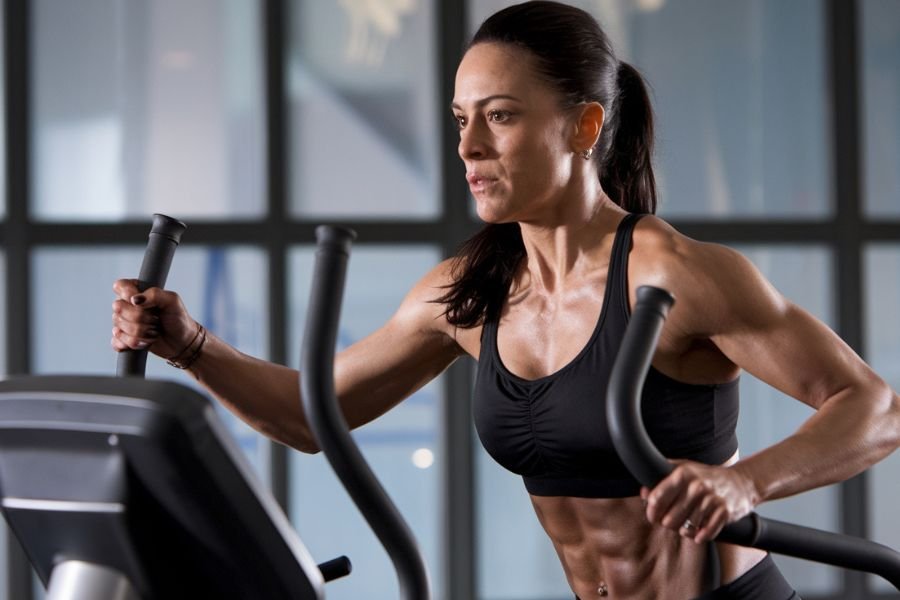
When you hold the moving handlebars, you recruit your arms, shoulders, chest, and back along with your legs and core. Some programs estimate that you engage up to about 80 percent of your muscles in one session, which makes your time on the machine very efficient for strength, balance, and calorie burn (Space Cycle, TRUE Fitness).
Key health benefits you can expect
The right elliptical workout for seniors can support nearly every area of your health. You do not need long or punishing workouts to see meaningful changes.
Heart and circulation
Elliptical training raises your heart rate into a moderate zone, which strengthens your heart muscle, improves lung capacity, and supports more efficient blood flow. This can help lower resting heart rate, blood pressure, and unhealthy cholesterol, which in turn reduces your risk of heart disease over time (Fitscope Studio, TRUE Fitness).
Because you can precisely adjust resistance and speed, it is easier to stay within a comfortable intensity. Many seniors do well at a rate of perceived exertion (RPE) of about 4 to 6 on a 1 to 10 scale, where you are breathing harder but can still hold a conversation (Verywell Fit).
Weight loss and muscle tone
If weight loss is one of your goals, the elliptical is a strong ally. You activate your glutes, quadriceps, hamstrings, calves, core, and upper body in one session, which increases overall energy expenditure and helps you burn calories more efficiently (Fitscope Studio).
The combination of cardio and gentle resistance on the pedals turns each workout into both a heart and strength session. Over time, this supports a leaner, more balanced physique without the need to isolate single muscle groups or lift heavy weights (Fitscope Studio).
Joint comfort and bone health
If you live with arthritis, past injuries, or general joint sensitivity, you may find that impact based workouts leave you sore. The elliptical reduces that stress by keeping your feet in constant contact with cushioned pedals and guiding your movement in a smooth arc. This weightless, gliding sensation can ease strain on knees, hips, and ankles compared with running or stair climbing (Fitscope Studio, Verywell Fit).
At the same time, the gentle resistance is still weight bearing enough to stimulate bone remodeling, which helps maintain or improve bone density in a safer way than high impact activities. That is especially important if you are managing or trying to prevent osteoporosis (TRUE Fitness).
Balance, coordination, and fall prevention
Falls are a major concern for many older adults. Regular elliptical workouts strengthen your core, back, and leg muscles, all of which play a critical role in balance and stability. As you move your arms and legs in a coordinated pattern, you also train your nervous system to manage whole body movement more smoothly (Fitscope Studio, TRUE Fitness).
Holding the handlebars provides an extra layer of safety while you build this strength, especially when you are just getting started or if your balance currently feels unsteady.
If you want one machine that protects your joints while building heart health, strength, and balance at the same time, the elliptical is a very practical choice for your home or gym routine.
How to choose a senior friendly elliptical
You will feel more confident and comfortable on an elliptical that matches your body and your needs. A few design features make a real difference for seniors.
Look for a stable frame with a wide, non slip base. This helps the machine stay steady as you step on and off and reduces any side to side wobble during your workout. Many senior oriented programs also recommend padded or textured pedals and ergonomic handles that are easy to grip (Space Cycle).
Stride length should align with your height so that your motion feels natural rather than choppy. As a general guideline, a stride around 20 inches suits many people between about 5 feet 3 inches and 6 feet tall, while shorter or taller individuals may be more comfortable with different lengths (BarBend).
You may also want to consider:
- Adjustable resistance and, if available, incline so you can fine tune intensity without increasing joint stress (CNET)
- A user weight capacity of around 300 pounds or more for long term durability and safety (BarBend)
- Simple controls with clear buttons and displays, so you are not fighting the console each time you work out
If you have significant knee pain or find standing difficult, a recumbent style cross trainer like the Teeter FreeStep LT3 lets you enjoy a seated, low impact elliptical motion that reduces pressure on your joints and back while still working your upper and lower body (CNET).
For very small spaces or if you prefer to exercise while seated at a desk or in a chair, compact under desk machines such as Cubii models provide gentle, low impact movement with multiple resistance levels in a quiet, easy to move design (BarBend, CNET).
Safe starting tips before you step on
Before beginning any new exercise routine, especially if you have existing health concerns, check in with your healthcare provider. This is particularly important if you have severe joint damage or recent surgery. Many people with mild to moderate joint pain can safely benefit from the low impact motion, but you want a clear green light for your specific situation (Harison Fitness).
When you are ready to start:
- Begin with short sessions of about 10 to 15 minutes, three to four times per week, and increase to 20 to 30 minutes as your comfort and endurance grow (Verywell Fit, Harison Fitness)
- Warm up with a few minutes of very light pedaling before you add resistance or speed
- Keep your posture tall with your gaze forward and shoulders relaxed to avoid back or neck strain
- Hold the handlebars whenever you feel unsteady, and only experiment with hands free balance work once you are very comfortable on the machine
- Stay well hydrated and finish each session with gentle stretching to maintain flexibility (Space Cycle)
Pay attention to any sharp pain, dizziness, or unusual shortness of breath. If these show up, stop your workout and talk with your doctor before continuing.
Beginner friendly elliptical workout for seniors
This simple routine is designed to keep your joints happy while you build stamina and strength. You can adjust the numbers slightly based on how you feel, but keep the intensity in the moderate range where you are working yet still able to speak in full sentences.
20 minute starter routine
-
Warm up, 3 minutes
Pedal at very low resistance. Focus on smooth, controlled motion as you get used to the feel of the machine. -
Easy effort, 4 minutes
Increase resistance slightly. Aim for an RPE of about 3 to 4 out of 10. You should feel like you are taking a brisk walk. -
Moderate intervals, 10 minutes total
Alternate between:
-
1 minute at moderate resistance, RPE 5 to 6, breathing deeper but still talking comfortably
-
1 minute at your easier resistance, RPE 3 to 4, to recover
Repeat this 5 times for a total of 10 minutes. Over the coming weeks you can extend the number of intervals or nudge the resistance up a level when it starts to feel too easy (Verywell Fit).
-
Cool down, 3 minutes
Return to very light resistance and slower pedaling. Let your breathing come down gradually. -
Off machine stretch, 3 to 5 minutes
Gently stretch your calves, quadriceps, hamstrings, hips, chest, and shoulders. This supports flexibility and can reduce post workout stiffness (Space Cycle).
You can follow this plan three days per week to meet a large portion of the 150 minutes of moderate weekly exercise recommended for adults, including seniors. As this workout begins to feel easy, either add an extra interval cycle, extend your total time by a few minutes, or add one more day per week.
Simple ways to get more from each workout
Small adjustments in how you use the elliptical can make your workouts more effective without making them feel harder on your body.
Try occasionally using the moving handlebars to emphasize your upper body, then switching to the stationary handles or letting your arms swing naturally so your legs and core do more of the work. This variation prevents overuse and keeps more muscles engaged over the week (TRUE Fitness).
You might also:
- Vary resistance slightly every few minutes instead of staying on one level the entire time, which keeps your muscles responsive
- Focus on pushing through your heels some days to target your glutes and hamstrings, and on a smoother mid foot press other days to share the load with your quadriceps
- Combine your elliptical sessions with light strength exercises and stretching on off days to build overall fitness and injury resistance (Space Cycle)
Above all, consistency matters more than intensity. A moderate elliptical workout that you enjoy and repeat regularly will do far more for your weight, strength, and health than a few very hard sessions that you dread.
If you start with just 10 to 20 minutes at a time and listen closely to your body, the elliptical can become a reliable, joint friendly way to stay active, independent, and strong well into your later years.
About The Author