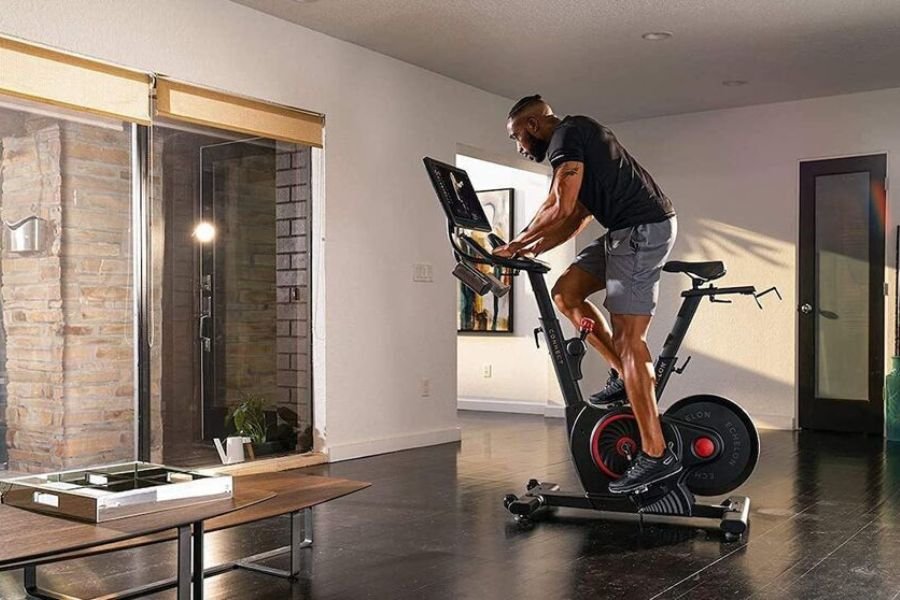
How Exercise Bike Strength Training Can Transform Your Body
A stationary bike can do much more than give you a quick sweat session. When you use it intentionally for exercise bike strength training, it becomes a powerful tool to reshape your body, build muscle, and support long-term health.
Instead of thinking of your bike as “just cardio,” you can treat it like a strength machine that challenges your legs, glutes, and core, and even your upper body when you add the right moves. Here is how that works in practice and how you can build it into your week.
Understand how an exercise bike builds strength
When you increase resistance on your bike, you are making your muscles work harder against a load. That is the foundation of strength training.
Indoor cycling targets large lower body muscles, especially your quadriceps, hamstrings, calves, and glutes. With enough resistance and smart intervals, you ask those muscles to push and pull with real force, which helps increase strength and stamina over time (NordicTrack).
Your core also works to keep you stable in the saddle, particularly your abs and lower back, and your arms and shoulders engage when you support yourself on the handlebars (NordicTrack). Increase resistance and change positions, and you turn what looks like simple pedaling into focused strength work.
Learn which muscles you work hardest
Different exercise bike setups and riding positions shift the focus slightly, but they all strengthen your lower body.
- Classic upright bikes mainly train your legs and glutes while sparing your joints
- Recumbent bikes let you lean back and support your back, so they emphasize lower body and endurance, not so much core or arms
- Racing and spin-style bikes mimic outdoor road cycling and are ideal for intense intervals and climbing work that rely heavily on your quads and glutes (NordicTrack)
When you stand on the pedals during a “hill,” grab the handles, and push your hips back over the saddle, you recruit more of your core and even some upper body. Changing resistance and posture in this way helps you build stronger, more defined legs and glutes and better overall stability (NordicTrack).
Use resistance to turn cardio into strength
Your exercise bike strength training results depend heavily on how you use resistance. Too low, and you spin your legs without much benefit. Too high, and your form breaks down.
Most bikes use a micro adjustable resistance knob that lets you dial in small changes as you ride (Sunny Health & Fitness). A simple way to know if you are in the right range is to use a 1 to 10 effort scale:
- Flat road should feel around 5 out of 10
- Light jog in the saddle should feel 6 to 7 out of 10
- Hill climbs should feel 7 to 9 out of 10 (Sunny Health & Fitness)
Cadence (pedal speed) is another useful cue. Higher resistance with a controlled cadence challenges your muscles in a strength focused way, while lower resistance with faster cadence targets more pure cardio. Monitoring both your perceived effort and your RPM helps you find the sweet spot for building strength without losing control of the bike (Sunny Health & Fitness).
Most importantly, your settings should fit you. You know your body and fitness level best, so you can adjust resistance up or down during a workout so it feels challenging but safe (Sunny Health & Fitness).
Combine intervals and strength for faster results
You do not have to choose between cardio and strength on the bike. Interval based exercise bike strength training lets you work both at once.
Indoor cycling intervals, where you alternate hard pedaling and easier recovery, have been shown to improve cardiovascular fitness, build leg strength, and shape a more efficient pedal stroke (Health.com). High intensity interval training, like repeated short, all out bursts followed by rest, can boost aerobic capacity, build muscle tissue, and support fat loss when you do it regularly (Health.com).
A typical strength focused interval block might look like this:
- Warm up gently for 5 to 8 minutes
- Increase resistance to a heavy but controllable level
- Sprint or grind up an “imaginary hill” for 30 to 60 seconds at 7 to 9 out of 10 effort
- Reduce resistance and spin lightly for 60 to 90 seconds
- Repeat 6 to 10 times
- Cool down easily for 5 minutes
This pattern is very similar to the power interval and Fartlek style workouts used in intermediate and advanced stationary bike routines that build endurance and power at the same time (Health.com).
Pair the bike with off bike strength training
If your goal is to transform your body shape, you will get the best results by pairing your bike work with traditional strength training.
Experts in cycling training note that riding alone is not enough to maximize strength and speed. Heavy lifting and targeted strength work improve metrics like time to exhaustion, time trial performance, cycling efficiency, and power (Bicycling). One meta analysis found that heavy lifting improved key cycling performance measures, which suggests that muscle and strength gains transfer directly to how well you can ride (Bicycling).
You do not have to start in the weight room immediately. If you are new to strength training, you can begin with bodyweight exercises such as planks, Spiderman pushups, pistol squat progressions, pull ups, and rowing movements on the floor to learn proper form and build a base (TrainerRoad).
As you get more comfortable, you can add compound lifts like squats, deadlifts, bench press, overhead press, and rows that target your glutes, hamstrings, quads, and core. These are the same muscles you rely on for powerful pedaling and stable posture on the bike (TrainerRoad, Bicycling).
Add upper body work to your bike sessions
You can also turn some of your bike time into a light full body session if you want to be efficient. During steady, moderate sections, you can use light dumbbells or resistance bands to train your arms, shoulders, and back while you keep your legs moving.
This approach, which some indoor spin programs use, lets you maintain your heart rate while you perform presses, curls, and rows, so you train upper body strength and endurance together with your cycling intervals (Gymsportz).
High intensity efforts that involve handlebar push pull actions and strong core engagement, especially on a spin style bike, can also challenge your upper body in a functional way when you stand and drive the pedals hard (Gymsportz).
Support fat loss and body composition change
If you are using exercise bike strength training to lose weight and change how your body looks, the combination of intervals, resistance, and steady rides can be very effective.
Interval training that alternates intense bursts with easier pedaling helps accelerate fat loss and weight management, especially when you do it two to three times a week (NordicTrack). Stationary cycling at moderate and hard levels, when combined with resistance exercises such as dumbbell circuits, keeps your heart rate elevated and improves your overall conditioning, which supports your strength program and your calorie burn (BarBend).
Research also shows that consistent stationary cycling can reduce fatigue and improve function in people with knee osteoarthritis, which is a good sign that it is gentle enough on joints for many people and can be sustained long term (Health.com).
For best body composition results, you will want to pair your bike sessions with strength training and nutrition habits that support muscle repair and fat loss. That mix is what helps you see visible changes in muscle definition and overall shape rather than just a lower number on the scale (NordicTrack).
A simple formula works well for most people: combine at least 150 minutes of moderate intensity cardio, such as 30 minutes a day on an exercise bike, with at least two days of strength training each week for heart health and muscle building benefits (NordicTrack).
Protect your joints while you get stronger
One of the biggest advantages of exercise bike strength training is how gentle it is on your knees, hips, and ankles compared with running or many high impact sports.
A stationary bike lets you choose from very low resistance for easy recovery rides to high resistance for tough strength intervals. Because your feet stay in contact with the pedals and there is no pounding, you can work hard without the same level of joint stress that comes from impact activities (BarBend).
The low impact nature of biking also tends to cause less muscle soreness than some other forms of cardio, which makes it a smart choice on days after heavy leg workouts or when you want active recovery that still supports your fitness goals (BarBend).
Proper setup is important, though. Adjusting your seat height and handlebar position to your body helps you engage the right muscles, avoid strain, and get the most out of your sessions. If you use a spin style bike, clipping into the pedals with cycling shoes can improve your power transfer and comfort during stronger efforts (NordicTrack, Gymsportz).
Fit bike strength training into your week
You can structure your week so that your exercise bike strength training supports your recovery rather than taking away from it.
Some cycling coaches suggest doing your strength training on the same days as your harder rides, then leaving other days truly easy, so your body gets full rest days when it can adapt and rebuild. On “hard days,” you might do a strength workout and then a shorter interval ride, or swap the order based on what feels better for you (TrainerRoad).
For many people, a simple pattern works well:
- 2 to 3 days a week of interval or strength focused rides
- 1 to 2 days a week of traditional strength training
- 1 to 3 days a week of easy, low resistance rides or rest, depending on your schedule and recovery
Using the bike two to three times per week has been shown to support cardiovascular health and fat loss, while staying gentle on joints and leaving enough energy for strength work (BarBend).
Start where you are and progress gradually
The most important part of making exercise bike strength training transform your body is consistency. You do not need extreme settings or hour long intervals to see benefits.
You can start with:
- Two 20 to 30 minute rides a week where you play with moderate resistance hills
- One short strength session at home with bodyweight moves
- Gentle recovery rides or walks on other days
As your fitness improves, you can add intervals, increase resistance slightly, or extend your sessions by a few minutes at a time.
Within a few weeks, you can expect to feel stronger on the bike and in daily life. Over the next few months, as you combine bike sessions, strength training, and supportive eating habits, you can see noticeable changes in muscle tone, posture, and overall energy.
About The Author


