Which Diet Wins for You: Paleo Diet vs Keto Explained
A paleo diet vs keto comparison can feel confusing at first. Both focus on whole foods, both can help you lose weight, and both often show up in the same conversations about blood sugar and inflammation. Yet they work in very different ways, and one of them may fit your life and health goals much better than the other.
Below, you will see how paleo and keto actually work, what you eat on each, the pros and cons, and how to decide which diet wins for you.
Understand the basics of paleo
The paleo diet, sometimes called the “caveman diet,” is built around eating the kinds of whole foods your distant ancestors might have eaten. That means focusing on food quality rather than counting macros or calories.
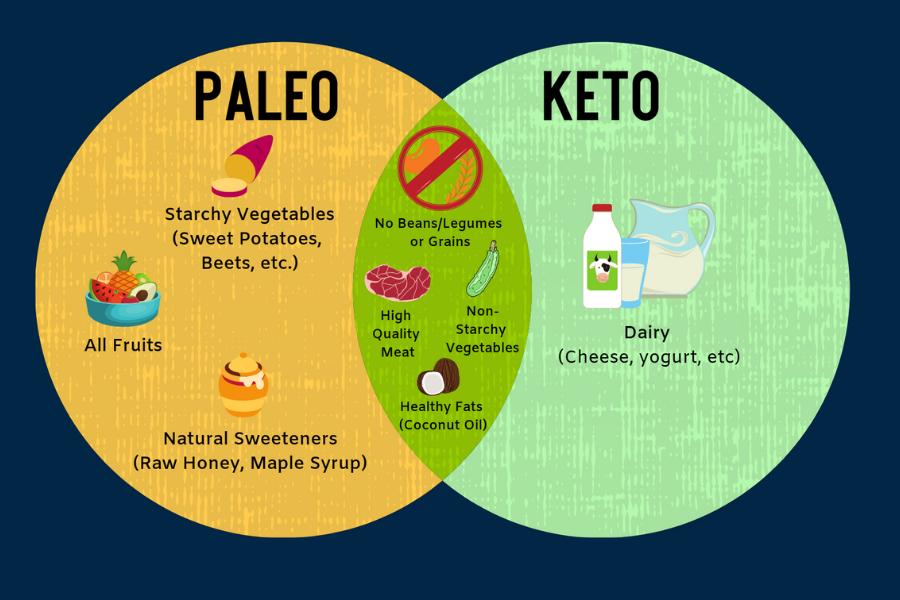
You mainly eat meat, fish, eggs, vegetables, fruits, nuts, and seeds. You avoid grains, legumes, most dairy, refined sugar, and heavily processed foods. The idea is that your body may do better on unprocessed, nutrient dense foods and less well on modern ultra processed options that appear to drive inflammation and blood sugar swings for many people. (Healthline)
What you eat and skip on paleo
On a typical paleo day, your plate is loaded with colorful vegetables, a decent portion of protein, and healthy fats. You do not have to hit specific carb or fat targets, and you do not need to be in a special metabolic state.
You generally:
- Eat: vegetables, fruits, meat, fish, eggs, nuts, seeds, and healthy oils
- Avoid: grains, legumes, refined sugar, industrial seed oils, and most dairy
Some versions of paleo emphasize organic produce and grass fed, wild caught, or free range animal products, and they cut out hydrogenated and highly refined oils as much as possible. This focus on food quality may support weight loss, lower inflammation, and improve risk factors for diabetes and cardiovascular disease. (MorningStar Family Health Center, WebMD)
How paleo may help your health
Research suggests that a paleo style diet can support weight loss, smaller waist size, reduced blood pressure, and better cholesterol profiles, which all matter for heart health. (WebMD) Because you naturally eat fewer ultra processed foods and added sugars, you often take in fewer empty calories without strict tracking.
Paleo is also flexible. You can include whole food carbohydrates like fruits, starchy vegetables, and small amounts of unrefined sweeteners if they work for your body. That flexibility is one reason many people find paleo easier to maintain as a long term lifestyle. (Healthline)
Understand the basics of keto
The ketogenic, or keto, diet is very different. Keto is not built around ancestral eating or food lists as much as it is built around macronutrient ratios and a specific metabolic state called ketosis.
On keto, you drastically lower your carbohydrate intake and increase fat so your body switches from burning glucose to burning fat and ketones for fuel. This shift can lead to rapid initial weight loss for some people and changes in appetite and energy. (Healthline, WebMD)
What you eat and skip on keto
Keto usually means about 60 percent of your calories from fat, 30 percent from protein, and only 10 percent from carbohydrates. In grams, that often means staying below roughly 50 to 100 grams of carbs per day, although many people aim lower. (WebMD, MorningStar Family Health Center)
You focus on:
- High fat foods like oils, butter, avocado, nuts, and fattier cuts of meat
- Moderate protein
- Very low carbohydrate intake
You avoid most grains, sugar, and starchy vegetables. Many fruits are off the table too, because they can quickly push you over your carb limit. Keto does allow dairy, especially higher fat options, which paleo typically does not. (MorningStar Family Health Center)
How keto may help your health
Keto was originally developed to treat seizures. Today, many people use it to lose weight, control blood sugar, and manage certain neurological or metabolic conditions. When you are in ketosis, your body relies more heavily on fat stores for energy, which is why weight and body fat can drop relatively quickly. (MorningStar Family Health Center)
You might notice reduced hunger and cravings, especially for sugary foods, once you are fully keto adapted. That alone can make it easier for you to eat fewer calories without feeling like you are fighting your body every day.
Key similarities between paleo and keto
Even though paleo and keto work differently, they share important ground. Understanding this overlap helps you see why both can support weight loss and better health when you follow them carefully.
Both diets:
- Emphasize whole, minimally processed foods
- Exclude grains and legumes
- Avoid added sugars
- Encourage healthy fats
- Can improve weight and metabolic measures when they help you reduce calories and cut ultra processed food
Both also push you to pay attention to labels and think harder about what you are eating, which can be a powerful habit change all by itself. (Healthline, Scripps Health)
However, the reasons for those restrictions differ. Paleo questions these foods from an evolutionary and antinutrient angle. Keto limits them mainly to keep your carb intake low enough for ketosis. (Healthline)
Important differences you should know
The real decision point for you sits in the differences. When you line them up, it becomes clearer which diet will feel more natural and sustainable in your daily life.
Carbs and flexibility
If you want more flexibility with carbohydrates, paleo usually fits better. You can eat fruits, starchy vegetables like sweet potatoes, and small amounts of natural sweeteners and still remain fully paleo. (Healthline, MorningStar Family Health Center)
On keto, those same foods are sharply limited or removed. Most fruits, starchy veggies, grains, and caloric sweeteners will quickly push you out of ketosis, so you have to be far more precise.
Food quality vs macro counting
Paleo pays attention to food quality, such as grass fed meats and organic produce, and it does not require macro tracking. Keto can also be based on whole foods, but what really matters is the macro ratio. You can, in theory, eat low quality processed foods and still be in ketosis if the macros line up, although that is not ideal for health.
Paleo feels more like a template for eating real food. Keto feels more like a structured tool you use to achieve a very specific metabolic outcome. (MorningStar Family Health Center)
Potential health risks and downsides
Both diets come with cautions that you should take seriously.
Paleo can lead to a high intake of animal products and saturated fat, depending on how you build your meals. That may increase the risk of cardiovascular disease and diabetes if you are not balancing your plate with plenty of vegetables, fruits, and healthy fats. (WebMD)
Keto can trigger nutrient deficiencies because it restricts grains and most fruits. You might fall short on selenium, magnesium, phosphorus, and vitamins B and C if you are not planning carefully. Keto can also be hard on your liver and kidneys, especially if you already have underlying issues. Some people notice cognitive side effects like confusion or irritability when carbs stay very low. (WebMD)
Certain groups are usually advised to avoid keto completely, including pregnant or nursing women, people with advanced kidney problems, and those with a history of eating disorders. Paleo, since it focuses on whole foods without requiring ketosis, is less likely to raise those specific concerns, although you should still speak with a professional before making big changes. (Scripps Health)
What heart experts say
It is worth knowing how major health organizations see both diets. A 2023 American Heart Association scientific statement scored popular diets for heart health. Paleo scored 53 out of 100, and keto scored 31. Both ended up in the lowest tier compared with patterns like the DASH or Mediterranean diets. (American Heart Association News)
They were rated poorly mainly because they tend to be high in fat without strong limits on saturated fat, and they restrict foods like fruits, whole grains, and legumes that are central to heart healthy guidelines. The AHA also notes that both are quite restrictive and tough for many people to maintain long term. Over the long haul, they do not seem to outperform less restrictive, more balanced diets for weight management. (American Heart Association News)
This does not mean you cannot use paleo or keto tools. It does mean you should be thoughtful and consider how you might adjust or cycle them to protect your heart health.
For most people, the best diet is not the trendiest one. It is the one you can live with comfortably for years while keeping your lab markers, energy, and mood in a healthy range.
Choosing between paleo and keto for your goals
Now that you have the big picture, it is time to connect it with what you want most from your diet: weight loss, energy, blood sugar control, or just feeling healthier and less inflamed.
If your top priority is sustainable weight loss
If you want to lose weight and keep it off without feeling like you are dieting forever, a paleo or paleo inspired pattern usually gives you more room to breathe. Both paleo and keto can produce weight loss by cutting calories and focusing on nutrient dense foods, but long term success hinges on whether you are willing to maintain your approach indefinitely. (Scripps Health)
A paleo or paleo keto style diet, which keeps carbs relatively moderate but still focuses on whole foods, is often recommended for long term weight loss and overcoming disordered eating patterns because you are not obsessively tracking macros every day. (MorningStar Family Health Center)
If you need help with sugar cravings and blood sugar
If you are trying to beat strong sugar cravings or manage blood sugar swings, keto or a paleo keto hybrid may work particularly well for you. Being in ketosis often dampens appetite and cravings, and ketones can provide a steady fuel source for your brain. That can feel like a relief if you are used to energy crashes. (MorningStar Family Health Center)
However, it is important to do this with medical guidance if you have diabetes or other metabolic conditions, since medications may need to change as your diet changes.
If you care most about variety and lifestyle fit
If you have a busy lifestyle, eat out with friends, or share meals with family who do not want to change their diets, paleo is often easier to adapt. You can order a protein and vegetable based meal at a restaurant, skip the bread and dessert, and still be on track without calculating every gram of carbohydrate.
Keto can feel socially and practically harder. Many common meals, from taco night to birthday parties, are very carb heavy, and staying in ketosis usually requires strict consistency. That is one reason many people use keto in shorter bursts and then shift to a more flexible paleo or Mediterranean pattern.
You might also explore more plant forward variations. For example, the Pegan diet combines a largely plant based plate, around 75 percent fruits and vegetables, with some paleo style principles and limits on beans, starches, sugar, dairy, and grains. This kind of approach may offer cardiovascular benefits alongside weight loss and can feel more balanced. (Scripps Health)
Practical next steps before you start
Before you jump into paleo vs keto, it helps to take these simple steps so you can make an informed and safe choice.
First, review your health history. If you are pregnant or nursing, have kidney or liver problems, a history of eating disorders, or complex medical conditions, talk with a healthcare professional before starting especially restrictive diets, particularly keto. (Scripps Health, WebMD)
Second, get clear on your time frame. Are you looking for a short term reset or a long term lifestyle? If you want a reset, you might experiment with a well planned keto or paleo keto phase. If you want a lifestyle shift, a flexible paleo or Pegan pattern may be easier to live with.
Third, plan your meals in advance. Whichever diet you choose, you will have much more success if your kitchen makes the right choice the easy choice. Stock your pantry with whole foods that match your plan, and clear out obvious triggers like sugary snacks and ultra processed convenience foods.
Finally, pay attention to how you feel. Track your energy, digestion, mood, and sleep for a few weeks. Weight and lab numbers matter, but your day to day quality of life matters just as much.
You do not have to stay locked into a single label forever. You can use what you learn from paleo and keto to design an eating pattern that works for your body, your schedule, and your goals, and that you can see yourself enjoying for years, not just weeks.
About The Author


